|
ششم و متوسطه اول
|
||
|
آگاهی انسانی، آگاهی اجتماعی |
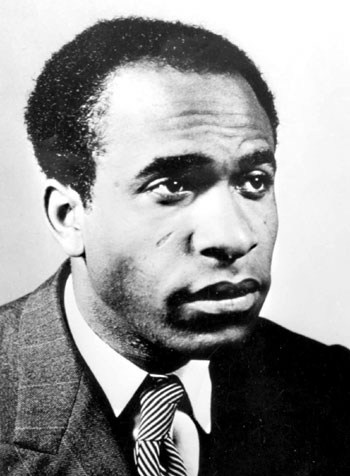
Frantz Fanon
Martinique and the Second World War
Frantz Fanon was born on the Caribbean
island of Martinique, which was then a French
colony and is now a French département. His
father was a descendant of enslaved Africans
and indentured Indians; his mother was of
African and European descent, whose white
ancestors came from Strasbourg in
Alsace. Fanon's family was socio-economically
middle-class. They could afford the fees for
the Lycée Schoelcher, then the most prestigious
high school in Martinique, where Fanon had the
writer Aimé Césaire as one of his teachers.F
After France fell to the Nazis in 1940, Vichy
French naval troops were blockaded on
Martinique. Forced to remain on the
island, French sailors took over the government
from the Martiniquan people and established
a collaborationist Vichy regime. In the face
of economic distress and isolation under the
blockade, they instituted an oppressive
regime; Fanon described them as taking
off their masks and behaving like "authentic
racists." Residents made many complaints of
harassment and sexual misconduct by the
sailors. The abuse of the Martiniquan people
by the French Navy influenced Fanon, reinforcing
his feelings of alienation and his disgust with
colonial racism. At the age of seventeen, Fanon
fled the island as a "dissident" (the coined word
for French West Indians joining Gaullist
forces), traveling to British-controlled Dominica
to join the Free French Forces.F
برچسبها: فرانتس فانون, استعمار فرانسه, استقلال الجزایر, نژاد پرستی

کاین سر پر هوس شود خاک در سـرای تـو

|